


 English
 русский
 Español
 中文简体
中文简体Content
- 1 What Are Biodegradable Cake Paper Cups?
- 2 Materials Used in Eco-Friendly Cake Paper Cups
- 3 Biodegradable vs. Conventional Cake Paper Cups: What Actually Differs
- 4 Why Bakeries and Food Businesses Are Making the Switch
- 5 How to Choose the Right Biodegradable Cake Cup for Your Needs
- 6 Common Mistakes to Avoid When Using Compostable Cake Liners
- 7 Where to Source Biodegradable Cake Paper Cups
What Are Biodegradable Cake Paper Cups?
Biodegradable cake paper cups are single-use baking cups designed to break down naturally after disposal, unlike conventional paper cups that are coated with polyethylene (PE) — a plastic film that prevents composting and recycling. These eco-friendly baking cups are typically made from materials such as unbleached kraft paper, PLA (polylactic acid) lining derived from corn starch, sugarcane pulp (bagasse), or bamboo fiber. The result is a cup that performs the same function as a traditional cupcake liner but leaves behind no lasting environmental footprint.
The term "biodegradable" is often used alongside "compostable" in this category, but the two are not identical. A biodegradable cup simply breaks down over time. A compostable cup breaks down within a specific timeframe — typically 90 to 180 days — under the right conditions, and leaves behind no toxic residue. When shopping for sustainable cake paper cups, looking for certified compostable options (such as EN 13432 or ASTM D6400 certification) gives you a more meaningful guarantee than "biodegradable" alone.
Materials Used in Eco-Friendly Cake Paper Cups
Not all biodegradable cake cups are made the same way. The base material has a direct impact on heat resistance, grease resistance, compostability timeline, and cost. Here is a breakdown of the most common materials on the market:
| Material | Source | Compostable? | Best For |
| Kraft paper + PLA lining | Wood pulp + corn starch | Industrial compost only | General baking, retail |
| Bagasse (sugarcane pulp) | Agricultural byproduct | Yes, home compostable | High-moisture bakes |
| Bamboo fiber | Bamboo plant | Yes, home compostable | Premium / gift baking |
| Unbleached kraft (unlined) | Recycled wood pulp | Yes, fully compostable | Dry cakes, muffins |
| PBAT-coated paper | Bio-based polymer blend | Industrial compost only | Greasy or wet fillings |
For home bakers who compost in their backyard, bamboo fiber and unlined kraft paper cups are the most practical choices. For commercial bakeries that send waste to industrial composting facilities, PLA-lined or PBAT-coated cups are a reliable and cost-effective option.
Biodegradable vs. Conventional Cake Paper Cups: What Actually Differs
Switching from standard to compostable cupcake liners raises a reasonable question: do they perform differently in the oven? The honest answer is — slightly, but not in ways that affect your bake. Here is what changes and what stays the same:
What stays the same
- Heat resistance up to 200°C / 392°F — sufficient for standard cupcake and muffin baking
- Structural integrity — they hold batter without collapsing in or outside a muffin tin
- Release quality — baked goods peel away cleanly from well-made biodegradable liners
- Standard sizing — available in mini, standard, and jumbo formats matching conventional dimensions
What is different
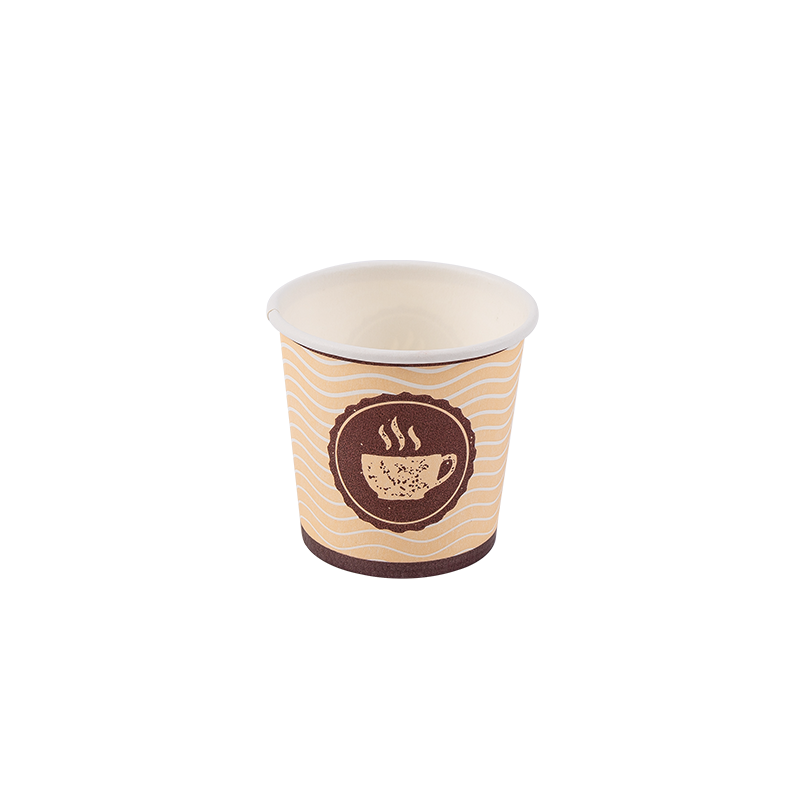
- Appearance — natural kraft and bamboo cups have a more rustic, unbleached look compared to bright white or printed conventional liners
- Grease resistance — unlined biodegradable cups may show grease spots on the exterior; PLA or PBAT-lined versions handle this better
- Cost — eco-friendly cake paper cups typically run 15–40% more per unit than conventional PE-lined cups at equivalent order volumes
- Disposal pathway — they require composting to deliver their environmental benefit; thrown into general waste, they behave similarly to standard paper
Why Bakeries and Food Businesses Are Making the Switch
The shift toward plant-based cake cups and compostable baking supplies is not purely idealistic — it is increasingly commercial. Customer purchasing decisions are influenced by visible sustainability signals, and packaging is one of the most visible. A 2023 Nielsen IQ report found that 69% of consumers in key markets say environmental impact affects their food purchasing choices at least some of the time.
For retail bakeries and café chains, switching to biodegradable cake paper cups is a low-cost, high-visibility sustainability action. The cups themselves cost only marginally more, but they communicate a values alignment that resonates with a growing customer segment. Several regional bakery chains have reported using their packaging switch as a social media talking point — photographing the natural kraft aesthetic against finished bakes — with strong engagement results.
There is also a regulatory tailwind. Single-use plastics regulations are tightening across the EU, UK, and parts of the US. PE-coated paper cups — including conventional cupcake liners — are increasingly under scrutiny. Transitioning to certified compostable alternatives now positions food businesses ahead of potential compliance requirements rather than behind them.
How to Choose the Right Biodegradable Cake Cup for Your Needs
With a growing number of suppliers offering compostable cupcake liners and eco-friendly baking cups, the choice can feel overwhelming. These are the factors that actually matter:
Certification over claims
Look for third-party certification rather than self-declared "biodegradable" or "eco-friendly" labels. The most recognized standards are EN 13432 (Europe), ASTM D6400 (USA), and AS 4736 (Australia). These confirm the product meets specific breakdown timelines and leaves no harmful residue. BPI (Biodegradable Products Institute) certification is also widely respected in North America.
Match the liner to your recipe
High-fat recipes — flourless chocolate cake, banana bread, anything with oil-heavy batter — need a lined cup with grease resistance. PLA-lined or PBAT-coated biodegradable cups handle these well. For drier muffins or sponge-based cupcakes, an unlined kraft or bamboo cup is perfectly sufficient and more compostable.
Consider your waste disposal setup
If your facility or household does not have access to industrial composting, choose home-compostable certified cups (typically bagasse or bamboo). PLA-lined cups require temperatures above 58°C to break down, which home compost heaps rarely reach. Buying industrially compostable cups without an industrial composting outlet reduces the environmental benefit significantly.
Verify sizing before bulk ordering
Standard cupcake cup dimensions are approximately 5cm base diameter × 3.5cm height for a regular size. Mini cups run around 3.5cm base × 2.5cm height. Always request a physical sample batch before committing to a large order — dimensional tolerances vary between manufacturers, and a cup that is 2mm too narrow will not sit properly in a standard 12-cup muffin tin.
Common Mistakes to Avoid When Using Compostable Cake Liners
- Storing them in humid conditions. Unlined kraft and bamboo cups absorb moisture from the air. Store in a sealed box in a dry environment or they will wrinkle and lose shape before baking.
- Assuming all biodegradable cups are grease-proof. They are not. Check the product specification. An unlined cup used for a high-butter recipe will develop visible grease patches that affect presentation.
- Disposing of them in recycling bins. Compostable cups contaminate paper recycling streams. They belong in compost, not the recycling bin.
- Choosing based on price alone. The cheapest biodegradable options often use minimal lining or thin base paper, leading to structural failure mid-bake. A cup that collapses costs more in wasted product than the few cents saved per unit.
- Ignoring the certification fine print. "Made with natural materials" is not a certification. Always verify the specific standard the product is certified to and whether it applies to home or industrial composting.
Where to Source Biodegradable Cake Paper Cups
For individual bakers, biodegradable and compostable cupcake liners are now widely available through mainstream retail channels including Amazon, Whole Foods, and specialty baking supply stores. Brands such as If You Care, Wilton's eco line, and several private-label options on Amazon carry EN 13432 or ASTM D6400 certified products in standard and mini sizes.
For commercial bakeries and food service operators purchasing at volume, working directly with a manufacturer or through a food service distributor is more cost-effective. Key questions to ask any commercial supplier include: What certifications do the cups carry? Do you hold safety stock, and what is your standard lead time? Can you provide custom printing on compostable stock? Are your materials FDA-compliant for direct food contact?
GPO and group purchasing contracts in the food service space are beginning to include compostable packaging categories, which can streamline procurement for larger operators. If your operation is already on a Sysco or US Foods contract, ask whether compostable baking cups are available within your existing agreement before sourcing separately.