


 English
 русский
 Español
 中文简体
中文简体Content
- 1 What Makes a Coffee Paper Cup Different From a Regular Paper Cup?
- 2 The Main Types of Paper Coffee Cups Explained
- 3 Standard Coffee Paper Cup Sizes: A Full Reference Guide
- 4 What's Actually Inside a Coffee Paper Cup? The Anatomy Explained
- 5
- 6 Eco-Friendly Coffee Paper Cup Options: What's Actually Better?
- 7 Choosing the Right Paper Coffee Cup for Your Business
- 8 Paper Coffee Cup Lids: Types and What to Look For
- 9 Tips for Buying Paper Coffee Cups in Bulk Without Wasting Money
What Makes a Coffee Paper Cup Different From a Regular Paper Cup?
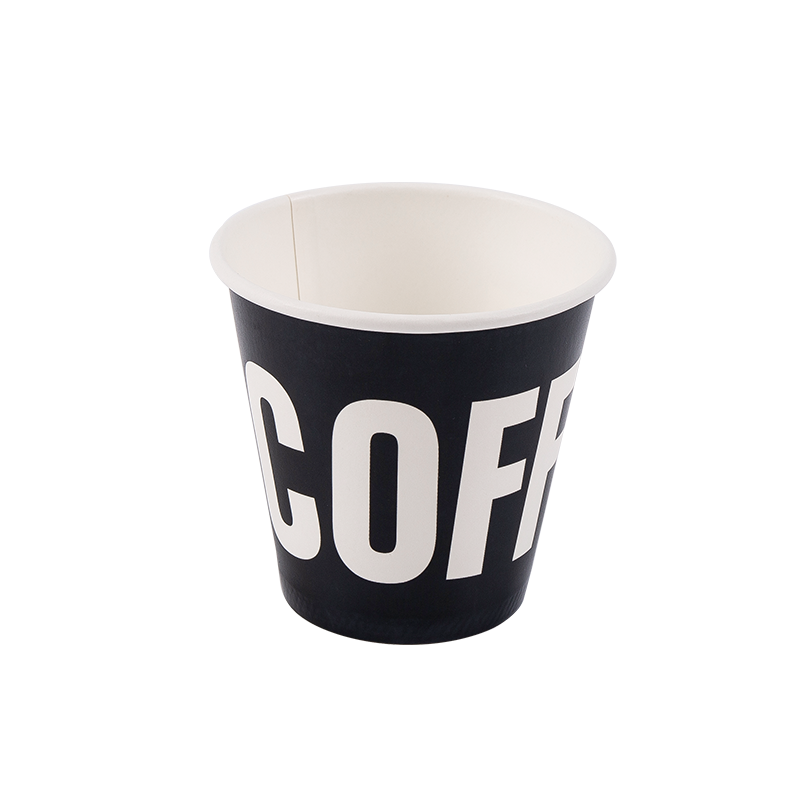
Not all paper cups are created equal. A coffee paper cup is specifically engineered to hold hot beverages safely — typically between 140°F and 185°F — without leaking, softening, or transferring heat uncomfortably to your hand. Regular cold-drink paper cups are coated with a thinner polyethylene layer designed only to prevent cold liquid absorption, and they can degrade quickly when filled with hot coffee. Hot coffee paper cups use a heavier PE coating or a double-wall construction to handle sustained heat exposure while maintaining structural integrity throughout the entire drink.
The distinction matters enormously for cafés, food service operators, and offices that go through large volumes of cups daily. Using the wrong cup — say, a cold-drink cup for hot espresso — results in cups that go soft, lids that don't seat properly, and customers who risk burning their hands. Understanding what separates a purpose-built disposable coffee cup from a generic paper cup is the first step to choosing the right product for your operation or personal use.
The Main Types of Paper Coffee Cups Explained
The disposable coffee cup market has expanded well beyond the basic white cup. Today there are several distinct construction types, each suited to different use cases, budgets, and sustainability goals.
Single Wall Paper Coffee Cups
Single wall cups are the classic, most affordable option — a single layer of paperboard coated on the inside with polyethylene to create a moisture barrier. They're lightweight, stack efficiently, and are the standard choice for fast-food chains, diners, and any operation prioritizing cost efficiency. The trade-off is that a single wall offers little insulation, so the outside of the cup gets hot quickly. This is why single wall cups are almost always paired with a corrugated cardboard sleeve or a separate hot cup jacket when serving drinks above 160°F. Without a sleeve, customers may find the cup uncomfortable to hold.
Double Wall Paper Coffee Cups
Double wall cups feature two layers of paperboard with an air gap between them, acting as a built-in insulator. This construction keeps the outer surface cool enough to hold comfortably without a sleeve, while also keeping the coffee hotter for longer. Double wall cups are thicker, more rigid, and have a premium feel that positions them well for specialty coffee shops, hotel lobbies, and corporate environments where presentation matters. They cost roughly 30–60% more per unit than single wall cups but eliminate the need for separate sleeves, partially offsetting the higher unit price.
Ripple Wall (Triple Wall) Paper Cups
Ripple wall cups have a distinctive textured outer layer — an additional sheet of paper formed into a rippled or corrugated pattern that is bonded to the outside of the cup. This creates superior insulation and a visually interesting tactile surface. They're the warmest-to-hold and best-insulating option in the paper cup category, and they have a premium, craft aesthetic that works well for independent coffee shops and artisan roasters who want their packaging to reflect their brand values. Ripple wall cups are the most expensive paper cup option but are also the most comfortable to hold without any additional sleeve.
Kraft Paper Coffee Cups
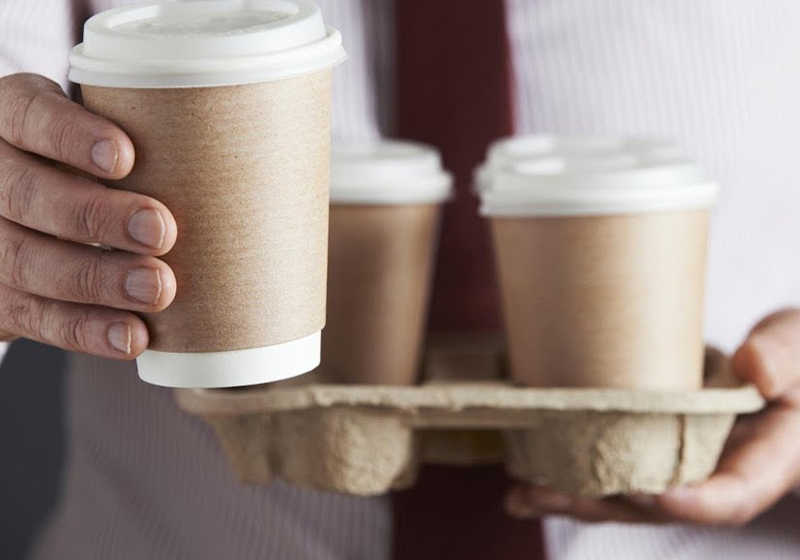
Kraft paper cups are made from unbleached brown paperboard, giving them a natural, earthy appearance that has become strongly associated with artisan and eco-conscious coffee culture. The brown color comes from the natural pulp without chemical whitening agents, which makes kraft paper cups a slightly less processed option. They're available in single, double, and ripple wall constructions. Many specialty cafés prefer kraft cups because the aesthetic signals sustainability and craftsmanship — even before the customer reads a word of the branding.
Standard Coffee Paper Cup Sizes: A Full Reference Guide
Coffee paper cup sizing follows loose industry standards, though terminology varies between suppliers and regions. Here's a practical reference covering the most common sizes used in the US market:
| Cup Size | Volume | Common Use | Lid Size |
| Espresso / Demitasse | 2–4 oz | Espresso shots, cortado | 62mm |
| Small | 8 oz | Small drip coffee, flat white | 80mm |
| Medium / Tall | 12 oz | Standard latte, cappuccino | 90mm |
| Large / Grande | 16 oz | Large latte, drip coffee | 90mm |
| Extra Large / Venti | 20–24 oz | Extra-large drip, iced drinks | 90mm or 104mm |
| Traveler / Carafe | 32–96 oz | Bulk coffee service, catering | Varies by supplier |
One critical detail when ordering cups in bulk: lid diameter must match the cup's rim diameter exactly. A lid that's 2mm too small will pop off; one that's 2mm too large will sit loosely and leak. Always verify lid compatibility with your cup supplier before placing a large order, especially if you're mixing cups from different manufacturers.
What's Actually Inside a Coffee Paper Cup? The Anatomy Explained
Understanding what a disposable coffee cup is made of is increasingly important for businesses making environmental commitments and consumers trying to make responsible choices. A standard hot coffee paper cup is not simply paper — it's a multi-material composite, and that complexity is at the heart of most recycling challenges.
- Paperboard outer shell: The structural backbone of the cup is typically 170–210gsm food-grade paperboard. This is virgin or recycled paper pulp that gives the cup its shape and rigidity. The quality and thickness of this board directly affects how long the cup holds its shape when filled with a hot liquid.
- Polyethylene (PE) inner coating: A thin film of low-density polyethylene (LDPE), typically 15–30 microns thick, is laminated to the inside of the cup. This plastic layer prevents hot liquid from being absorbed into the paper, which would cause the cup to go soft and leak. It's this PE layer that makes conventional paper cups non-recyclable in most standard paper recycling streams — the plastic must be separated from the paper before either can be processed.
- Printed outer surface: Most branded cups have ink printed directly on the outer paperboard using food-safe inks. The quality of printing — whether digital, flexographic, or offset — determines the resolution and color accuracy of logos and designs.
- Bottom disc: A separate paperboard circle, also PE-coated, is crimped and sealed to the base of the cup. This joint is one of the most critical leak points — cheaper cups often use thinner or improperly sealed base discs that fail under sustained heat or pressure.
Eco-Friendly Coffee Paper Cup Options: What's Actually Better?
The environmental impact of disposable paper coffee cups has received significant media and regulatory attention. The problem is that "eco-friendly" is a broad and often misleading marketing term in the cup industry. Here's a breakdown of the main sustainable alternatives and what each actually delivers:
PLA-Lined Compostable Coffee Cups
PLA (polylactic acid) is a bioplastic derived from plant starch — typically corn — used as an alternative inner lining to conventional polyethylene. PLA-lined cups are certified compostable under industrial composting conditions (ASTM D6400 or EN 13432 standards), meaning they break down within 90–180 days in a commercial composting facility at high temperatures and humidity. The critical caveat is "industrial" — PLA cups do not reliably compost in home compost bins, and they contaminate conventional paper recycling streams just as much as PE-lined cups. They're genuinely a better choice only if your local waste infrastructure includes industrial composting collection.
Aqueous-Coated (Waterborne Barrier) Cups
A newer innovation replaces the plastic film liner with a water-based barrier coating applied directly to the paper. These cups are fully recyclable in standard paper recycling streams because there's no plastic film to separate. Several major cup manufacturers now offer aqueous-coated cups that meet the same leakproof and heat-resistance performance standards as conventional PE-lined cups. They represent one of the most genuinely practical sustainable options because they work within existing recycling infrastructure rather than requiring new systems.
FSC-Certified Paper Cups
FSC (Forest Stewardship Council) certification on paper cup packaging means the paperboard was sourced from responsibly managed forests that meet standards for biodiversity, worker rights, and sustainable harvesting. FSC certification doesn't change how the cup is disposed of, but it addresses the upstream sourcing impact — a meaningful distinction for brands with specific sustainability commitments around deforestation and forest stewardship.
Recycled Content Paper Cups
Some manufacturers now offer cups made with a percentage of post-consumer recycled (PCR) paperboard content. These reduce the demand for virgin fiber, though food safety regulations in many regions limit how much recycled content can be used in direct food-contact applications. Cups with 30–50% recycled content are becoming more common as testing and approval processes advance.
Choosing the Right Paper Coffee Cup for Your Business
For cafés, restaurants, offices, and catering operations, choosing the right disposable coffee cup involves balancing cost, performance, branding, and sustainability commitments. Here are the most important factors to evaluate:
- Volume and cost per unit: Single wall cups are the most economical at high volumes — typically $0.05–$0.15 per cup depending on size and order quantity. Double wall and ripple wall cups run $0.12–$0.30 per cup. Factor in whether you'll also need to purchase cup sleeves for single wall cups, which typically add $0.03–$0.07 per serve.
- Branding and custom printing: Custom printed coffee cups with your logo are available from most wholesale suppliers with minimum order quantities typically starting at 1,000–5,000 cups. Digital printing is viable for shorter runs with complex full-color artwork; flexographic printing is more economical for large runs with simpler designs. Custom cups transform every to-go order into a mobile advertisement and significantly reinforce brand recognition.
- Lid compatibility: Always source cups and lids from the same supplier or confirm rim diameter compatibility. The most common lid styles are flat sipper lids (with a small drinking tab), dome lids (for drinks with foam or whipped cream), and traveler lids (with a sliding or hinged closure). Ensure your lids fit snugly without requiring excessive force to apply — barista efficiency matters during rush periods.
- Storage space: Paper cups require significant storage volume. A case of 1,000 12oz cups typically occupies 3–5 cubic feet. Plan storage with cup dispensers or organized shelving that keeps cups clean, dry, and accessible without crushing. Moisture or pest contamination in cup storage is a food safety issue.
- Compliance and certifications: Ensure cups are FDA-compliant for food contact (in the US) or carry equivalent regional food-safety certifications. If you're making eco-claims to customers — such as "compostable" or "recyclable" — verify those claims with the specific certifications (ASTM D6400, BPI certification, or the How2Recycle label) rather than relying on vague supplier marketing language.
Paper Coffee Cup Lids: Types and What to Look For
The lid is just as important as the cup itself, both for functionality and customer experience. A poorly fitting or poorly designed lid is one of the top sources of customer complaints in coffee service. Here are the main lid types and their best applications:
- Flat sipper lids: The most common lid style for hot coffee. A recessed drinking hole with a small fold-back tab allows sipping without removing the lid. These provide a secure, spill-resistant seal and work well for standard drip coffee and espresso-based drinks without foam.
- Dome lids: Dome-shaped lids with a wider opening are used for drinks with steamed milk foam, whipped cream, or cold-brew ice. The extra height accommodates the topping without crushing it. They're also frequently used for iced drinks in paper cups.
- Strawless sipper lids: These molded lids, popularized by Starbucks' "Nitro" lid design, have a raised drinking spout without a separate straw. They reduce plastic straw use while maintaining a premium aesthetic and are now widely available from wholesale suppliers.
- Compostable PLA lids: For operations committed to fully compostable serviceware, PLA lids made to match compostable cups are available. These must be certified compostable (look for BPI or TÜV certification) and properly disposed of through industrial composting to deliver their environmental benefit.
Tips for Buying Paper Coffee Cups in Bulk Without Wasting Money
Purchasing disposable coffee cups in bulk is standard practice for any operation serving more than a few dozen drinks per day, but there are several common mistakes that lead to wasted budget and frustration. Keep these practical guidelines in mind:
- Order samples before committing to a bulk purchase. Heat resistance, lid fit, and print quality can vary significantly between suppliers, even for cups described with identical specifications. Request a sample case of any new cup style and test it under real service conditions — fill with near-boiling water, apply a lid, and hold for five minutes to check for softening, leaking, or lid pop-off.
- Calculate your actual weekly consumption before ordering. Over-ordering ties up cash and storage space; under-ordering disrupts service. Track cup usage for two to three weeks across all sizes, then calculate a 4–6 week supply buffer. Avoid the temptation to over-order a single size just because the per-unit price drops — excess inventory of the wrong size is a hidden cost.
- Standardize your size range. Many cafés stock three cup sizes: 8oz, 12oz, and 16oz. Adding a 20oz or 24oz option adds SKU complexity and storage demands. Unless customer demand clearly justifies it, a tight size range simplifies ordering, storage, and staff training.
- Verify the supplier's food safety documentation. Reputable wholesale cup suppliers should readily provide FDA compliance letters, Prop 65 compliance statements (if selling in California), and any relevant environmental certifications. If a supplier is reluctant to share documentation, that's a red flag.
- Consider a cup dispenser system. Proper dispensers keep cups clean, reduce handling contamination, and speed up service during busy periods. Many cup manufacturers offer dispenser units matched to their cup dimensions — often free or subsidized with bulk orders. This small operational detail has a measurable impact on both hygiene and service speed.