


 English
 русский
 Español
 中文简体
中文简体Content
- 1 What Are Disposable Paper Boxes and Why Do They Matter?
- 2 Common Types of Disposable Paper Boxes
- 3 Key Materials Used in Paper Box Manufacturing
- 4 Where Disposable Paper Boxes Are Used Every Day
- 5
- 6 Are Disposable Paper Boxes Actually Eco-Friendly?
- 7 Food Safety Standards for Paper Food Boxes
- 8 Tips for Using and Disposing of Paper Boxes Responsibly
What Are Disposable Paper Boxes and Why Do They Matter?
Disposable paper boxes are single-use containers made primarily from paperboard, kraft paper, or coated cardboard, designed to hold, protect, and transport food or other goods. You'll find them everywhere — from fast-food counters and bakery shops to meal-kit deliveries and retail packaging. Unlike plastic containers, paper-based alternatives have gained massive popularity due to growing environmental concerns, stricter regulations on single-use plastics, and shifting consumer preferences toward sustainable packaging. Understanding what these boxes are made of and how they function helps both businesses and everyday consumers make smarter, more responsible choices.
The term "disposable paper boxes" covers a surprisingly wide range of products. Some are simple folded kraft boxes used for fries or snacks; others are multi-layered, grease-resistant containers engineered to hold hot soups or oily foods without leaking. The common thread is that they are intended for one-time use, are lightweight, and are typically recyclable or compostable depending on their coating and material composition.
Common Types of Disposable Paper Boxes
Not all paper boxes are built the same. Different applications call for different structures, materials, and coatings. Here are the most widely used types you'll encounter across industries:
Kraft Paper Boxes
Made from unbleached kraft pulp, these boxes have a natural brown appearance and are known for their strength and durability. They're commonly used for bakery items, sandwiches, and dry snacks. Kraft paper boxes are widely considered one of the most eco-friendly options because they are biodegradable and can often be recycled without special processing.
PE-Coated Paper Boxes
These are paperboard boxes laminated with a thin layer of polyethylene (PE) on the inside. The coating creates a moisture and grease barrier, making them suitable for hot foods, soups, and beverages. However, the plastic lining complicates recycling and composting, which is a growing concern for environmentally-focused brands.
PLA-Coated Paper Boxes
Polylactic acid (PLA) is a plant-based bioplastic used as a coating alternative to PE. PLA-coated disposable paper boxes are compostable under industrial conditions, making them a preferred choice for businesses aiming to reduce plastic waste. They perform similarly to PE-coated boxes in terms of moisture resistance but come with better environmental credentials.
Corrugated Paper Boxes
With a fluted inner layer sandwiched between two flat sheets, corrugated paper boxes offer superior insulation and structural strength. They're ideal for pizza delivery, shipping fragile goods, and transporting items that need temperature retention. These boxes are highly recyclable and are a staple in both foodservice and e-commerce packaging.
White Cardboard Boxes
Smooth, bleached cardboard boxes are popular in the bakery, confectionery, and retail sectors. Their clean white surface is print-friendly, allowing for high-quality branding and labeling. They're commonly used for cakes, pastries, gift items, and cosmetic products. Depending on the coating, some are suitable for light food contact, while others are used purely for retail packaging.
Key Materials Used in Paper Box Manufacturing
The performance and environmental impact of a disposable paper box depend heavily on the materials used. Below is a quick comparison of the most common materials:
| Material | Moisture Resistance | Recyclable | Compostable | Typical Use |
| Kraft Paper | Low | Yes | Yes | Dry foods, bakery |
| PE-Coated Board | High | Limited | No | Hot food, soup, beverages |
| PLA-Coated Board | High | Limited | Yes (industrial) | Eco takeout, food delivery |
| Corrugated Board | Medium | Yes | Partially | Pizza, shipping, insulation |
| White Cardboard | Low–Medium | Yes | Partially | Retail, bakery, gifts |
Where Disposable Paper Boxes Are Used Every Day
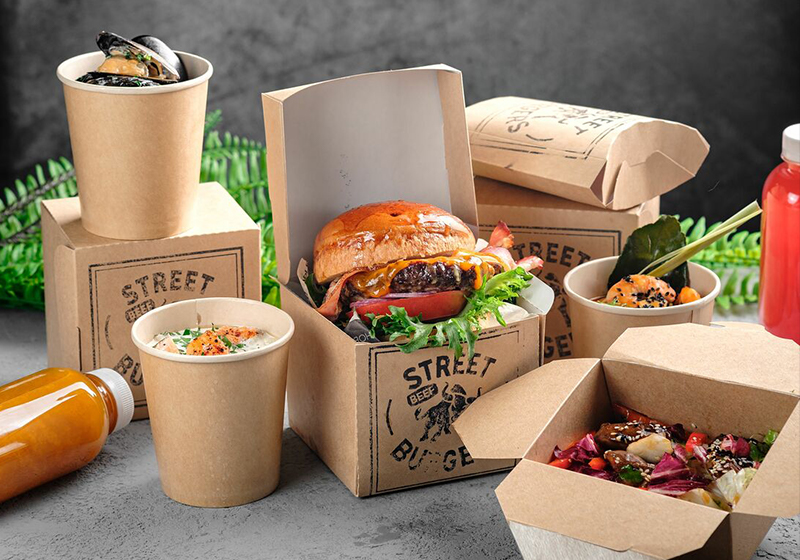
Single-use paper food boxes and paper packaging boxes have become deeply embedded in modern life. Their applications span multiple industries, each with specific requirements for size, strength, and food safety compliance.
- Food Service & Takeout: Restaurants, food trucks, and cafeterias use paper takeout boxes for everything from fried chicken and noodles to salads and sushi. The demand for leak-proof, heat-retaining designs is particularly high in this segment.
- Bakeries & Confectioneries: Pastry boxes, cake boxes, and cookie packaging are usually made from white cardboard or kraft paper. These need to be food-safe, printable for branding, and structurally strong enough to protect delicate items.
- Meal Kit & Food Delivery Services: Companies like HelloFresh and similar services rely on insulated paper boxes to keep ingredients fresh during transit. These boxes often combine corrugated layers with interior insulation liners.
- Retail & E-Commerce: From cosmetics to electronics accessories, disposable cardboard paper boxes are the backbone of retail packaging. They protect products during shipping while serving as a branding surface.
- Events & Catering: At outdoor festivals, corporate events, and school cafeterias, single-use paper boxes enable efficient food service without the need for dishwashing infrastructure.
Are Disposable Paper Boxes Actually Eco-Friendly?
This is one of the most frequently debated questions in the packaging world. The answer is nuanced. Paper boxes are often marketed as a green alternative to plastic, and in many cases, they are — but not always unconditionally.
Uncoated kraft or cardboard paper boxes are genuinely biodegradable and widely recyclable. When disposed of correctly, they break down relatively quickly and can re-enter the paper supply chain. In this sense, they are a far better option than polystyrene foam or multi-layer plastic containers.
However, PE-coated paper boxes present a problem. The thin plastic film bonded to the paper makes separation difficult in standard recycling facilities, often resulting in these boxes being sent to landfill. PLA coatings are a better alternative but require industrial composting infrastructure — meaning they won't break down in your home compost bin or a regular landfill environment.
The production side also matters. Paper manufacturing is resource-intensive, requiring significant water usage, energy, and — unless sourced sustainably — contributes to deforestation. Boxes certified by the Forest Stewardship Council (FSC) use paper sourced from responsibly managed forests, which is the standard to look for when prioritizing sustainability.
Food Safety Standards for Paper Food Boxes
When paper boxes come into contact with food, they must meet strict food safety standards to prevent contamination. Reputable manufacturers adhere to internationally recognized certifications and guidelines, which consumers and businesses should always check.
- FDA Compliance (USA): Food-contact paper products sold in the United States must comply with FDA regulations under 21 CFR (Code of Federal Regulations), which governs the types of inks, adhesives, and coatings that can be used.
- EU Food Contact Regulations: In Europe, paper packaging must conform to Regulation (EC) No 1935/2004, which requires that materials in contact with food do not transfer harmful substances to the food in quantities that could endanger human health.
- PFAS-Free Certification: Per- and polyfluoroalkyl substances (PFAS) — also known as "forever chemicals" — have historically been used in grease-resistant paper packaging. Many countries are now banning or restricting PFAS use, and certified PFAS-free paper boxes are increasingly the industry standard.
- BPI Certification (for compostable boxes): The Biodegradable Products Institute (BPI) certifies compostable packaging in North America. A BPI label on a paper box means it has been independently verified to meet ASTM D6400 composting standards.
Tips for Using and Disposing of Paper Boxes Responsibly
Even the most eco-friendly disposable paper box is only as sustainable as how it's used and discarded. Here are some practical tips to maximize the environmental benefit of paper packaging:
- Check for recycling symbols or composting labels before discarding. Not all paper boxes go in the same bin.
- Remove any food residue before recycling — heavily soiled boxes are often rejected by recycling facilities and end up in landfill anyway.
- Avoid using paper boxes in microwave ovens unless the packaging specifically states it is microwave-safe — some coatings and inks can degrade or release harmful compounds when heated.
- Flatten boxes before placing them in the recycling bin to save space and make collection more efficient.
- When shopping or ordering, look for businesses that use FSC-certified, PFAS-free, or BPI-certified paper box packaging — your purchasing decisions drive demand for better products.