


 English
 русский
 Español
 中文简体
中文简体Content
- 1 Why Getting Your Paper Box Choice Right Actually Matters
- 2 Step One: Match the Box Type to Your Product
- 3 Understanding Paper Box Specifications
- 4 Sustainability Considerations When Sourcing Paper Boxes
- 5 Custom vs. Stock Paper Boxes: Which Is Right for Your Business?
- 6 How to Evaluate and Vet a Paper Box Supplier
- 7 Quick Reference: Choosing the Right Box by Business Type
Why Getting Your Paper Box Choice Right Actually Matters
Choosing the right disposable paper boxes for your business isn't just a packaging decision — it affects your food quality, customer experience, operational costs, and brand reputation. A box that leaks, collapses under heat, or looks cheap can undermine even the best product inside it. On the flip side, the right paper food box keeps your food presentation intact, communicates your brand values, and can even justify a higher price point in customers' minds. This guide breaks down exactly what to evaluate so you can make a well-informed sourcing decision.
Whether you run a small café, a large food delivery operation, or a retail brand in need of product packaging, the fundamentals of selecting paper box packaging remain consistent. You need to match the box to the product, align the material with your sustainability goals, and find a supplier who can deliver consistently at the volume and price point your business requires.
Step One: Match the Box Type to Your Product
The single biggest mistake businesses make is choosing a paper box based on price alone, without considering whether it's genuinely suited to the product it will contain. Here's how to think through the match:
Hot and Oily Foods
If you're packaging fried chicken, burgers, pasta, or similar hot and greasy items, you need a paper box with a robust moisture and grease barrier. PE-coated or PLA-coated paperboard boxes are the standard choice here. Look for a minimum board weight of 350–400 gsm for structural integrity, and make sure the inner coating is certified food-safe. A flimsy, uncoated kraft box will turn soggy within minutes of hot food contact — not acceptable for delivery or dine-in service.
Cold or Refrigerated Foods
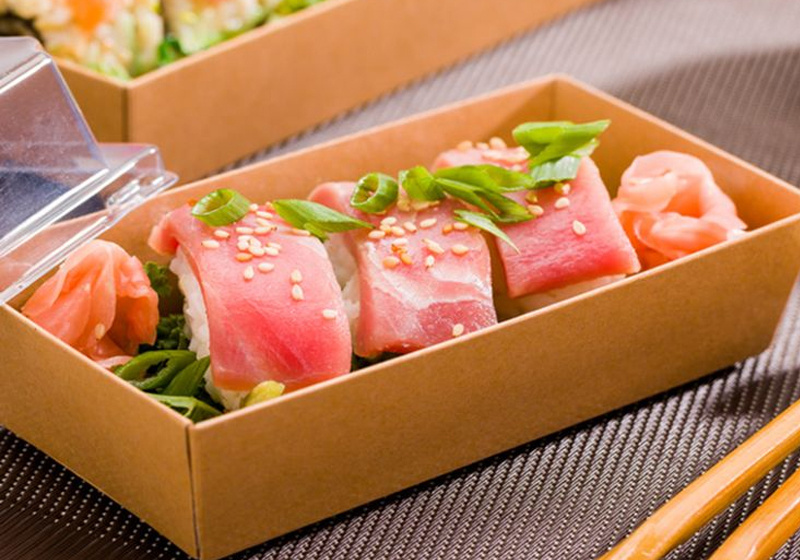
For salads, sushi, cold cuts, or refrigerated meal components, you still need moisture resistance, but heat tolerance is less critical. What matters more is condensation management — the box should not become limp or delaminate when exposed to cold, humid conditions. Some suppliers offer wax-alternative coatings that handle condensation well without compromising recyclability.
Dry Baked Goods and Confectionery
For cookies, pastries, chocolates, or bread, uncoated white cardboard or kraft paper boxes are usually sufficient. The priority here shifts to structural rigidity (you don't want a box that crushes easily), clean print surface for branding, and a food-safe interior. Window boxes — paper boxes with a clear PET or PLA viewing window — are very popular in this segment because they allow customers to see the product without opening the package.
Retail and Non-Food Products
If you're using disposable cardboard paper boxes for retail packaging — cosmetics, small electronics, apparel accessories — the focus shifts almost entirely to aesthetics and structural protection. Surface finish (matte, gloss, soft-touch lamination), print quality, and closure style all become primary concerns. Food safety certifications are irrelevant in this context, but quality certifications like ISO 9001 still matter for consistency.
Understanding Paper Box Specifications
When communicating with suppliers or reviewing product listings, you'll encounter a range of technical terms. Here are the most important specifications to understand and evaluate:
| Specification | What It Means | What to Look For |
| Board Weight (gsm) | Grams per square meter — indicates thickness and strength | 300–450 gsm for food boxes; 200–300 gsm for lighter retail |
| Coating Type | Inner/outer surface treatment for moisture or grease | PE for standard, PLA for eco-friendly; none for dry goods |
| Printing Method | How the design is applied to the box surface | Offset for large runs; digital for short runs or proofing |
| Closure Style | How the box closes and stays shut | Tuck-end, lock-bottom, auto-bottom — choose by use case |
| MOQ | Minimum Order Quantity | 500–1,000 for custom print; as low as 50–100 for stock boxes |
| Food Safety Cert | Verification that materials are safe for food contact | FDA 21 CFR / EU 1935/2004 / LFGB (Germany) |
Sustainability Considerations When Sourcing Paper Boxes
Sustainability is no longer optional for most consumer-facing businesses. Customers read labels, and a growing segment actively chooses brands based on packaging ethics. When evaluating eco paper boxes for your supply chain, focus on these four areas:
Raw Material Sourcing
Always ask whether the paper used in manufacturing is FSC-certified or sourced from sustainably managed forests. Some suppliers also offer recycled content paper, where a percentage of the paperboard is made from post-consumer waste. Recycled-content paper boxes generally have a lower carbon footprint than virgin fiber alternatives, though they may have slightly lower tensile strength.
Coating and End-of-Life
As discussed, the coating determines whether a box can be recycled or composted. If your brand's sustainability claims rely on compostable packaging, make sure you're using PLA-coated or uncoated boxes, and that your local waste management infrastructure actually supports industrial composting. Advertising a box as "compostable" when there are no industrial composting facilities nearby can constitute greenwashing — a significant reputational and legal risk.
Ink and Adhesive Safety
Soy-based or water-based inks are preferred over petroleum-based inks for eco-conscious packaging. They contain fewer volatile organic compounds (VOCs) and are easier to de-ink during the paper recycling process. Ask your supplier about the adhesives used in box construction — some chemical adhesives can contaminate recycling streams.
PFAS-Free Assurance
PFAS-free paper boxes are increasingly mandated by law across the US, EU, and other markets. Even where they are not yet required, switching to PFAS-free alternatives protects your business from future regulatory risk and aligns with consumer expectations. Always request written confirmation from your supplier that their grease-resistant treatments do not contain PFAS compounds.
Custom vs. Stock Paper Boxes: Which Is Right for Your Business?
One of the most practical decisions you'll face is whether to invest in custom-printed paper boxes or buy ready-made stock boxes. Both approaches have legitimate use cases, and the right choice depends on your volume, budget, and branding priorities.
- Stock Paper Boxes: Pre-made in standard sizes and colors (usually plain kraft or white), stock boxes have no MOQ, low unit costs, and can be ordered and received within days. They're ideal for new businesses, seasonal spikes, or situations where packaging is functional rather than branded. Some businesses add a custom sticker or label to stock boxes as a low-cost branding solution.
- Custom Printed Paper Boxes: Fully customized with your logo, brand colors, and design, custom paper boxes create a cohesive unboxing experience and significantly enhance brand perception. The tradeoff is a higher upfront investment (due to plate/setup costs), a longer lead time (typically 2–4 weeks for first orders), and a minimum order quantity usually starting at 500–1,000 units. For established businesses with a steady volume, custom boxes almost always deliver a better ROI.
- Semi-Custom Options: Some suppliers offer a middle ground — stock box shapes and sizes with a single-color or two-color print. These are more affordable than full custom printing while still delivering a branded look. They're a good option for growing businesses that aren't yet ready for full custom production runs.
How to Evaluate and Vet a Paper Box Supplier
Once you know what you need, finding a reliable supplier is the next critical step. Here's a structured approach to vetting potential paper packaging suppliers:
Request Samples First
Never place a bulk order without physically testing samples. Check the box's structural integrity, how it holds up when filled with your product, whether the print quality matches the proof, and how the closure performs under real conditions. This step alone can save you from costly mistakes.
Verify Certifications
Ask for documentation of all relevant certifications — FSC, FDA compliance, LFGB, BPI, or any others that apply to your market. A legitimate supplier will have these readily available. Be cautious of vague claims like "eco-friendly" or "food-safe" without third-party certification to back them up.
Assess Lead Times and Stock Reliability
Understand the supplier's standard production and delivery timeline, and ask what happens when demand spikes. A supplier who cannot reliably fulfill reorders on time can disrupt your entire operation. Ask for references from other businesses of a similar size and volume to yours.
Compare Total Cost, Not Just Unit Price
A lower unit price doesn't always mean a lower total cost. Factor in minimum order quantities, shipping fees, storage costs, and the cost of potential quality issues. Sometimes a slightly more expensive supplier with better service, faster lead times, and more consistent quality delivers significantly more value over a 12-month period.
Quick Reference: Choosing the Right Box by Business Type
Use this table as a starting framework when beginning your search for the right disposable paper box solution:
| Business Type | Recommended Box Type | Key Feature to Prioritize | Eco Option |
| Fast Food / Takeout | PE or PLA-coated paperboard box | Grease & moisture resistance | PLA-coated, PFAS-free |
| Bakery / Café | White cardboard or kraft window box | Print quality, product visibility | FSC-certified kraft |
| Food Delivery Service | Corrugated insulated paper box | Insulation, structural strength | Recycled corrugated |
| Retail Brand | Custom-printed folding carton | Brand aesthetics, finish quality | Recycled content board |
| Catering / Events | Stock kraft or white paper boxes | Cost efficiency, quick availability | Uncoated kraft, compostable |