


 English
 русский
 Español
 中文简体
中文简体Content
- 1 What a Sushi Paper Box Is Made Of and Why That Matters
- 2 The Main Types of Sushi Paper Boxes Available on the Market
- 3 Comparing Sushi Paper Box Materials at a Glance
- 4 Food Safety Requirements Every Sushi Paper Box Should Meet
- 5 How Sushi Paper Boxes Help Keep Sushi Fresh During Transport
- 6 Choosing the Right Sushi Paper Box Size and Format for Your Menu
- 7 Sustainability Considerations When Sourcing Sushi Paper Boxes
What a Sushi Paper Box Is Made Of and Why That Matters
A sushi paper box is a disposable or reusable packaging container made primarily from food-grade paperboard, designed specifically to hold sushi rolls, nigiri, sashimi, and related Japanese cuisine for takeout, delivery, or retail display. Most sushi paper boxes are produced from either white paperboard or kraft paperboard, both of which start as a fairly absorbent base material that needs additional treatment before it's suitable for moist, oily food like sushi. Disposable sushi boxes are typically coated or laminated to improve their resistance to oil and water, since raw fish, vinegared rice, and soy sauce can quickly compromise an untreated paper box if it isn't properly protected against moisture.
The choice of coating has a real impact on how the box performs. A polyethylene (PE) coating is one of the most common treatments, since it makes the paper box genuinely waterproof and oil-resistant while keeping the structure lightweight, and PE-coated kraft can typically withstand temperatures up to around 120°C, although direct microwave use still isn't recommended. As recyclability concerns have grown, manufacturers have increasingly shifted toward PLA (a plant-based bioplastic) coatings and water-based oil-resistant treatments as alternatives to traditional PE, since PE coatings make the box harder to recycle through standard paper recycling streams.
The Main Types of Sushi Paper Boxes Available on the Market
Sushi paper boxes come in several distinct formats, each suited to a different part of the sushi business, from quick takeout counters to upscale platter presentation. Picking the right format affects not just appearance but also how well the sushi survives the trip from kitchen to customer.
- Standard kraft or white paperboard sushi box: the everyday workhorse for takeout and delivery orders
- Window sushi paper box: includes a clear film or cellulose window so customers can see the sushi without opening the lid
- Pop-up (self-erecting) sushi paper box: unfolds into shape automatically without glue or assembly tools, speeding up packing during busy service
- Sushi box with dividers: includes internal compartments to separate rolls, sauces, or accompaniments and prevent flavors from mixing
- Mailer-style sushi box: combines takeout functionality with a rigid shipping structure for e-commerce and longer-distance delivery
- Bagasse sushi box: made from sugarcane fiber rather than wood pulp paperboard, offering a naturally textured look and full compostability
Window-style boxes have become especially popular for retail and grab-and-go settings, since a clear die-cut window on the lid lets customers see the sushi inside, which builds trust in freshness and presentation without anyone needing to open the package. This visibility matters a lot in supermarkets and convenience stores, where a sushi paper box is competing for attention on a shelf next to other ready-to-eat options.
Comparing Sushi Paper Box Materials at a Glance
Beyond standard coated paperboard, sushi packaging is increasingly offered in a range of materials that each bring a different mix of cost, durability, and environmental impact. The table below summarizes how the most common options compare.
| Material | Key Strength | Best Suited For |
| PE-Coated Kraft Paperboard | Strong waterproof and oil-resistant barrier | General takeout and delivery |
| PLA-Coated Paperboard | Compostable, eco-friendly barrier coating | Sustainability-focused brands |
| Bagasse (Sugarcane Fiber) | Naturally biodegradable, sturdy, oil and moisture resistant | Eco-conscious catering and retail |
| Paperboard with PET/PP Lid | High transparency, microwave-safe options | Retail display and reheatable meals |
Food Safety Requirements Every Sushi Paper Box Should Meet
Because a sushi paper box comes into direct contact with raw fish, vinegared rice, and condiments, it has to satisfy a specific set of food safety requirements that go well beyond simply looking the part. These requirements exist precisely because packaging failures can directly affect consumer health, so they're worth understanding whether you're a restaurant owner sourcing boxes or a packaging buyer evaluating suppliers.
Material Certification and Migration Testing
A genuinely food-safe sushi paper box should use materials that meet recognized food-grade standards, such as FDA or LFGB certification, confirming that nothing in the box will leach harmful substances into the food. This is particularly important for sushi because vinegared rice is mildly acidic, and acidic foods are more likely to draw out chemical residues from poorly formulated coatings or inks than neutral foods would. Migration testing, which simulates real food contact conditions, should confirm that any heavy metals, plasticizers, or other harmful substances stay below recognized safety limits.
Leak Resistance and Structural Integrity
A reliable sushi paper box needs a verified leak-proof design, since soy sauce, pickled ginger juice, and moisture from the sushi itself can quickly ruin a box that wasn't engineered to handle liquid exposure. Quality manufacturers typically validate this through air pressure or vacuum testing during production, ensuring the seams and coating hold up under realistic handling conditions rather than just looking sealed on the shelf.
Labeling and Ink Safety
Printed branding on a sushi paper box should always use non-toxic ink with strong adhesion, since flaking or peeling ink near food is both a contamination risk and a quality red flag for customers. Complete labeling matters too: production date, expiration date, material composition, and recommended operating temperature should all be clearly printed, and packaging missing this information typically isn't compliant for commercial sale in most regulated markets.
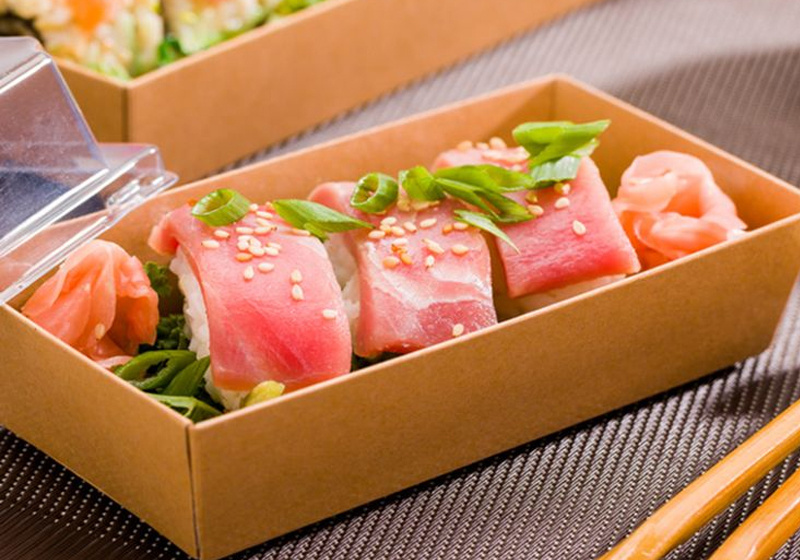
How Sushi Paper Boxes Help Keep Sushi Fresh During Transport
Sushi presents a uniquely tricky packaging challenge because it's sensitive to moisture imbalance, temperature swings, and odor absorption all at once. Vinegared rice can dry out if a sushi paper box is too breathable, while seaweed can turn limp and soggy if trapped humidity has nowhere to escape, which means the packaging design has to strike a careful balance rather than simply sealing everything airtight.
Well-designed sushi paper boxes address this with breathable food-grade liners or micro-perforated seals that allow limited airflow, preventing both rice dehydration and condensation buildup inside the box. Fully airtight sushi paper boxes are generally discouraged for rolls containing high-humidity ingredients like cucumber or tamago, since trapped moisture accelerates sogginess faster than a controlled, slightly breathable design would. For longer delivery distances or hot climates, some sushi paper box designs incorporate an insulating layer or are paired with cold gel inserts to manage temperature fluctuation, since raw fish needs to stay within safe temperature limits throughout the entire delivery window, not just at the moment of packing.
Choosing the Right Sushi Paper Box Size and Format for Your Menu
Sizing a sushi paper box correctly is about more than fitting the rolls; it also affects how well the food stays in place during handling and how much the packaging costs at scale. Common sushi paper box dimensions on the market range from compact single-serving sizes around 111 by 75 by 45mm up to larger formats exceeding 200mm in length for combo meals or party platters, with window-style variants often built around similar footprints to accommodate the cut-out viewing panel.
- Match the box size to your most common order type to avoid excess empty space that allows rolls to shift in transit
- Use divided sushi paper boxes for combo orders that mix rolls, nigiri, and sauces to prevent flavor crossover
- Choose window boxes for retail and grab-and-go settings where visual presentation drives purchase decisions
- Consider paperboard thickness carefully, since heavier-gauge board supports larger platters without sagging, while lighter board is more economical for single servings
- For shipped orders, choose a reinforced mailer-style sushi box rather than a standard takeout format, since it's built to survive courier handling
Sustainability Considerations When Sourcing Sushi Paper Boxes
Sustainability has moved from a nice-to-have feature to a baseline expectation for many sushi customers, and packaging choices now play a real role in how a brand is perceived. Kraft paperboard itself is made from sustainable, renewable wood pulp and carries a meaningfully lower carbon footprint than most plastic alternatives, which is part of why it remains the dominant base material for sushi paper boxes across the industry.
That said, the coating applied to the paperboard determines how genuinely eco-friendly the finished sushi paper box actually is. A standard PE coating, while effective at blocking moisture, makes the box significantly harder to recycle through conventional paper recycling streams, which has driven many manufacturers toward PLA biodegradable coatings or water-based oil-resistant alternatives instead. Bagasse sushi boxes, made from sugarcane fiber byproduct rather than wood pulp, take this a step further by offering full compostability along with strong inherent water and oil resistance, making them an increasingly popular choice for brands that want to minimize environmental impact without sacrificing performance. When evaluating suppliers, it's worth asking directly whether a given sushi paper box is recyclable in standard household streams, industrially compostable only, or genuinely home-compostable, since these three outcomes are very different in practice despite often being marketed with similar "eco-friendly" language.