


 English
 русский
 Español
 中文简体
中文简体Content
- 1 What Is a Hamburger Paper Box and Why Does It Matter?
- 2 Common Types of Hamburger Paper Boxes
- 3 Materials Used in Hamburger Paper Box Manufacturing
- 4 Standard Sizes for Hamburger Paper Boxes
- 5 Custom Printing Options for Branded Burger Boxes
- 6 Eco-Friendly and Sustainable Hamburger Box Packaging
- 7 How to Order Hamburger Paper Boxes: What to Prepare
- 8 Hamburger Box Packaging for Food Delivery and Takeaway
What Is a Hamburger Paper Box and Why Does It Matter?
A hamburger paper box is a food-grade paperboard container specifically designed to hold, present, and protect burgers during service and delivery. Unlike a simple paper wrap, a burger paper box fully encloses the sandwich, keeping heat in, grease contained, and the bun from getting crushed during handling. You'll find them in fast food chains, gourmet burger restaurants, food trucks, and takeaway operations of every size — and for good reason. The right burger box does more than just hold food; it actively preserves food quality, communicates brand identity, and meets food safety standards.
The hamburger box packaging market has grown significantly alongside the global boom in burger restaurants and food delivery services. Operators who once defaulted to generic foil wraps or plain paper bags are increasingly switching to custom-printed hamburger paper boxes because the branding opportunity alone justifies the cost. When a customer opens a delivery bag and sees a well-designed burger box with your logo on it, that visual moment reinforces brand recognition in a way that no plain wrapper ever could.
Common Types of Hamburger Paper Boxes
Hamburger paper boxes come in several structural formats, each suited to different service styles, burger sizes, and operational workflows. Understanding the options helps you pick the right format for your specific use case.
Clamshell Burger Box
The clamshell is the most widely used hamburger paper box format in the foodservice industry. It features a hinged lid and base that are die-cut from a single paperboard blank and fold into shape without glue or assembly. The lid locks over the base to create a secure, semi-enclosed container. Clamshell burger boxes are fast to open and close, easy to stack, and work well for both dine-in tray service and takeaway. They're available in sizes ranging from small slider boxes to extra-large gourmet burger boxes and can be printed on all external panels.
Straight-Wall Burger Box with Separate Lid
This format consists of a flat-bottomed tray and a separate matching lid. It provides a cleaner, more premium visual presentation than a clamshell and is commonly used by upscale burger restaurants and boutique food brands. The lid fits snugly over the tray, creating a box-like appearance that looks polished on a tray or inside a delivery bag. The trade-off is slightly slower assembly and the need to manage two separate components in a busy kitchen environment.
Wrap-Style Burger Box
Some operators use a hybrid format that combines a partial paperboard base or tray with a paper wrap that folds around the top of the burger. This style is particularly popular in fast casual and street food settings where speed of wrapping is important and the visual aesthetic leans toward a casual, artisan look. The paperboard base provides structural support while the printed wrap adds branding. This format is generally lower cost than a full clamshell box but offers less heat retention.
Windowed Burger Box
A windowed hamburger box includes a small transparent PET or PLA film window on the lid or side panel, allowing the burger to be seen without opening the box. This format is popular for premium retail burgers, meal kits, and display-oriented service counters where visual appeal drives purchase decisions. Windowed burger boxes are more complex to manufacture and slightly higher in cost but create a compelling product presentation that can justify a premium price point.
Materials Used in Hamburger Paper Box Manufacturing
The performance of a hamburger paper box — its grease resistance, heat retention, structural strength, and print quality — is largely determined by the material it's made from. Most burger boxes are constructed from one of the following paperboard types:
- SBS (Solid Bleached Sulfate) Board: A premium white paperboard with a smooth, clay-coated surface that accepts high-resolution printing with excellent color fidelity. SBS board is the preferred choice for branded hamburger paper boxes where vibrant graphics and sharp logo reproduction are priorities. It is food-safe and available with grease-resistant coatings.
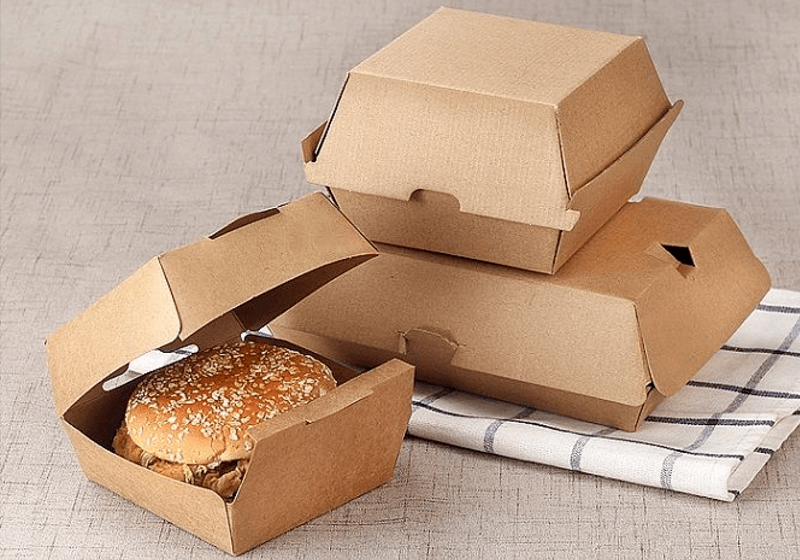
- Kraft Paperboard: Made from unbleached wood pulp, kraft board has a natural brown appearance that communicates an eco-friendly, artisan aesthetic. It is strong, cost-effective, and popular with food trucks, gourmet burger joints, and brands that want to project a natural or sustainable image. Kraft hamburger boxes are often left with minimal printing to emphasize the raw material.
- Grease-Resistant Coated Board: Any base paperboard — SBS or kraft — can be treated with a grease-resistant (GR) coating or barrier layer. This coating prevents burger grease, sauces, and moisture from soaking through the box wall, which would weaken the structure and create a messy customer experience. GR-coated hamburger boxes are essential for juicy burgers with heavy sauces.
- PE-Coated Board: Some hamburger paper boxes are coated with a thin layer of polyethylene (PE) on the interior surface. PE coating provides a strong moisture and grease barrier and is widely used in high-volume fast food operations. However, PE-coated boards are more difficult to recycle and are increasingly being replaced by PLA (polylactic acid) or other compostable barrier coatings in sustainability-conscious markets.
- Recycled Paperboard: Some manufacturers offer hamburger boxes made from post-consumer recycled content. These are suitable for operators with strong sustainability commitments, though recycled board typically has lower whiteness and slightly reduced print quality compared to virgin SBS. Food-safe certification is essential for any recycled-content burger box.
Standard Sizes for Hamburger Paper Boxes
Burger sizes vary enormously across different restaurant formats, from mini sliders to towering double-patty gourmet creations. Choosing the right box size is important — a box that's too large allows the burger to shift and collapse, while one that's too small compresses the bun and ruins the presentation. The table below shows common hamburger paper box sizes used in the industry:
| Box Type | Typical Dimensions (L × W × H) | Best For |
| Slider Box | 90 × 90 × 55 mm | Mini burgers, sliders, kids' meals |
| Standard Burger Box | 120 × 120 × 70 mm | Regular single-patty burgers |
| Medium Burger Box | 135 × 135 × 80 mm | Double-patty or thick gourmet burgers |
| Large Burger Box | 150 × 150 × 90 mm | Triple-stack, brioche bun, smash burgers |
| XL / Gourmet Box | 160 × 160 × 100 mm+ | Oversized specialty burgers, tall stacks |
Most packaging suppliers offer these sizes as standard stock options, with custom dimensions available for orders above a minimum quantity threshold — typically 5,000 to 10,000 units depending on the supplier.
Custom Printing Options for Branded Burger Boxes
For restaurant operators and food brands, the hamburger paper box is one of the most visible touchpoints in the customer experience. A plain white or unprinted kraft box misses a significant branding opportunity. Custom-printed hamburger boxes allow you to reinforce your brand identity, communicate values like sustainability or quality, and create a memorable unboxing moment — all of which contribute to customer retention and word-of-mouth marketing.
Printing Methods
The most common printing methods used for hamburger paper boxes are offset lithography, flexographic printing, and digital printing. Offset litho delivers the highest print quality with sharp detail and accurate color matching — it's the standard for premium branded burger boxes and is cost-effective at medium to high volumes. Flexographic printing is faster and more economical for simpler, one- to three-color designs on kraft board. Digital printing eliminates the need for printing plates, making it the best choice for short runs, seasonal designs, or prototyping new packaging before committing to a large order.
Finishing Options
Beyond the base print, hamburger paper boxes can be enhanced with a range of surface finishing options that elevate the perceived quality of the packaging. Matte or gloss lamination over the printed surface adds durability and a premium tactile quality. Spot UV varnish can be applied selectively to highlight a logo or graphic element, creating a contrast between the matte background and a glossy raised design. Hot foil stamping in gold, silver, or custom colors is used by high-end burger restaurants to add a luxury feel to their packaging. Embossing or debossing creates a three-dimensional texture in the board surface, further reinforcing a premium brand positioning.
Eco-Friendly and Sustainable Hamburger Box Packaging
Consumer awareness of packaging waste has put significant pressure on foodservice operators to adopt more sustainable hamburger box packaging solutions. The good news is that the paperboard-based burger box is inherently more environmentally friendly than plastic or foam alternatives — but there are meaningful differences in sustainability between different paper box options that are worth understanding.
- FSC-Certified Board: Look for hamburger paper boxes made from FSC (Forest Stewardship Council) certified paperboard, which guarantees that the wood pulp originates from responsibly managed forests. FSC certification is one of the most widely recognized sustainability credentials in food packaging.
- Compostable Barrier Coatings: To replace PE coatings, manufacturers are increasingly using PLA (polylactic acid) or aqueous dispersion coatings that provide effective grease and moisture barriers while remaining compostable in industrial composting facilities. These coatings allow the burger box to be certified as compostable under standards such as EN 13432 or ASTM D6400.
- Recyclability: Uncoated or aqueous-coated hamburger paper boxes can typically be recycled through standard paper recycling streams, provided they are not heavily contaminated with food grease. PE-laminated boxes, by contrast, must be separated and are not accepted by most curbside recycling programs.
- Soy-Based and Water-Based Inks: The environmental credentials of a burger box extend to the inks used to print it. Soy-based and water-based inks contain lower levels of VOCs than petroleum-based inks and are more compatible with paper recycling processes. Specify these ink types when ordering custom-printed hamburger boxes if sustainability is a brand priority.
- Minimalist Design to Reduce Ink Coverage: From a practical sustainability standpoint, designs with lower ink coverage use fewer resources and are easier to recycle. A simple two-color logo design on kraft board has a significantly lower environmental footprint than a full-coverage CMYK print on white SBS board, even if both boxes are made from FSC-certified material.
How to Order Hamburger Paper Boxes: What to Prepare
Whether you're sourcing stock hamburger boxes or commissioning a custom-printed run, being well-prepared speeds up the process, reduces costly errors, and helps you get exactly what you need. Here's what to have ready before contacting a supplier:
- Burger Dimensions: Measure the diameter and height of your assembled burger at its widest and tallest point. Add at least 10–15 mm to each dimension to allow for easy insertion and closure without compressing the bun. This is your target internal box dimension.
- Required Quantity: Know your approximate monthly or annual volume. Minimum order quantities for custom-printed hamburger paper boxes typically start at 5,000 units for simple designs and go up to 10,000–50,000 units for full-color custom work. Higher quantities significantly reduce per-unit cost.
- Artwork Files: Prepare your logo and design assets in vector format (AI or EPS files) with all fonts outlined. Suppliers will provide a dieline template — the flat structural layout of the box — onto which your designer should apply the artwork. Confirm color specifications using Pantone (PMS) references for accurate color matching.
- Material and Coating Preferences: Specify whether you want white SBS or natural kraft board, and what kind of grease-resistant treatment you need based on how saucy or greasy your burgers typically are. Indicate whether recyclability or compostability is a requirement.
- Lead Time Requirements: Custom hamburger paper boxes typically require 3–6 weeks from artwork approval to delivery for orders from domestic suppliers, and 6–10 weeks for overseas production. Factor this into your launch timelines and stock planning.
Hamburger Box Packaging for Food Delivery and Takeaway
The rapid growth of food delivery platforms has changed the requirements for hamburger paper box packaging in important ways. A box that performs well for a 3-minute walk from counter to table needs different characteristics from one that must survive a 30-minute motorcycle delivery in a thermal bag. For delivery-focused operations, the following features are especially important.
Ventilation and Condensation Control
A fully sealed hamburger box traps steam from the hot burger inside the container, which condenses on the lid and drips back onto the bun, making it soggy by the time it arrives. Some burger boxes include small ventilation perforations on the lid or sides that allow steam to escape while still retaining enough heat. Balancing ventilation against heat retention is a packaging design challenge that different suppliers solve in different ways — ask your supplier specifically about their approach to condensation management in their delivery-format burger boxes.
Structural Integrity Under Stack Pressure
During delivery, multiple boxes may be stacked in a bag, with fries, drinks, and other items pressing down from above. The hamburger paper box must maintain its structural integrity under this pressure to prevent the burger from being crushed. Board weight (caliper) and structural design both affect compression strength. For delivery operations, specify a heavier-caliper board — typically 350–400 gsm — and choose a box format with a reinforced lid structure rather than a thin single-ply lid.
Tamper-Evident Features
Food safety and customer trust have made tamper-evident packaging a growing requirement for delivery burger boxes. Some hamburger paper boxes incorporate a simple locking tab that must be visibly broken to open the box, or a peel-and-seal sticker label across the closure. These features reassure customers that the food has not been interfered with between the kitchen and their door — an increasingly important consideration as third-party delivery platforms handle orders across multiple restaurants simultaneously.