


 English
 русский
 Español
 中文简体
中文简体Content
The Global Challenge of Single-Use Plastics
The modern world is awash in convenience, much of it delivered through single-use packaging. While incredibly useful for takeaways and food service, traditional plastic and Styrofoam containers have created a monumental waste crisis. These materials often take hundreds of years to break down, clogging landfills, polluting our oceans, and harming wildlife. The visual and environmental impact of plastic waste has driven consumers and businesses alike to seek out more sustainable alternatives.
Why We Need Sustainable Solutions Now
The sheer volume of plastic waste generated globally is staggering. Every piece of plastic ever made still exists in some form, and only a small fraction is effectively recycled. This reality has spurred innovation in materials science, leading to the development of products that offer the same convenience without the lasting environmental damage. The focus has shifted toward materials that are derived from renewable resources and can safely return to the earth.
Enter the Biodegradable Revolution
A promising area of this innovation is the rise of truly biodegradable packaging. Unlike plastics, which merely fragment into microplastics, biodegradable products are designed to be consumed by microorganisms in the environment, breaking down into natural elements like water, carbon dioxide, and biomass. This process completes the natural cycle and significantly reduces long-term pollution.
Decoding “Biodegradable”
It is important to understand that “biodegradable” is not a blanket term. For a product to be genuinely environmentally friendly, it ideally needs to be compostable, meaning it can break down in a composting facility within a specific timeframe and leave behind no toxic residue. Many plant-based materials, like those derived from corn starch or sugarcane pulp (bagasse), meet these criteria.
The Versatility of Biodegradable Rectangular Paper Bowls
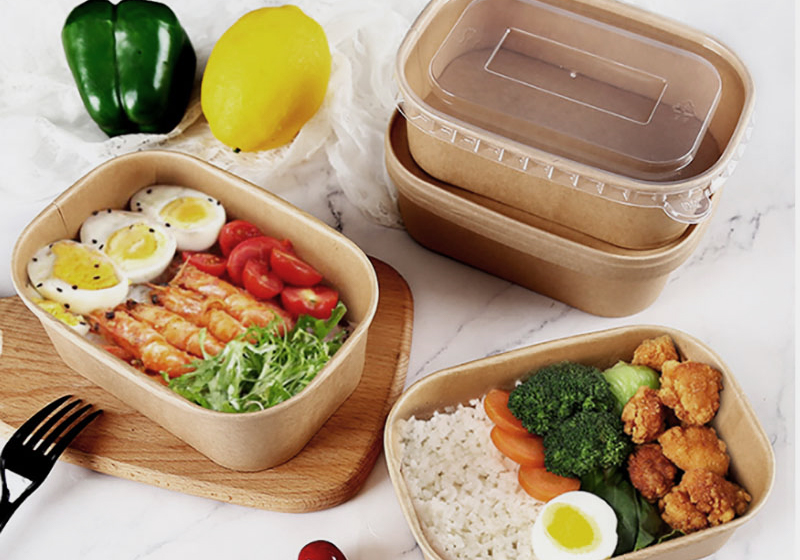
The specific product, Biodegradable Rectangular Paper Bowls, exemplifies how practical design can meet ecological demands. These bowls are not just an eco-friendly choice; they are also highly functional for a variety of food service needs.
Construction and Material Science
These bowls are typically crafted from sustainably sourced wood pulp or bagasse. The paper is molded into a rectangular shape, which is particularly efficient for stacking, transport, and portion control for items like salads, grain bowls, and hot entrees. To prevent leaks and maintain structural integrity, the bowls are lined with a thin, food-grade barrier. Crucially, in a truly biodegradable bowl, this lining is usually made from a bio-plastic like Polylactic Acid (PLA) or a water-based coating, ensuring the entire product can break down safely.
Performance and Practicality
Despite being made of paper and being environmentally friendly, these bowls are surprisingly robust. They are designed to withstand both hot and cold temperatures, making them suitable for everything from ice cream to hot soups. Their sturdy construction ensures they don’t wilt or leak during a meal, providing a dining experience comparable to traditional plastic containers, but with a clear conscience. The rectangular shape also offers a more upscale and modern aesthetic compared to traditional round bowls.
The Impact on Consumers and Businesses
The shift to packaging like Biodegradable Rectangular Paper Bowls is a win-win for both consumers and businesses.
Consumer Demand for Sustainability
Today’s consumers are more environmentally conscious than ever before. They actively seek out businesses that demonstrate a commitment to sustainability. Choosing biodegradable packaging is a powerful way for restaurants and catering services to signal their dedication to the planet, boosting brand reputation and attracting a growing segment of environmentally aware customers.
Regulatory and Economic Drivers
Governments worldwide are increasingly implementing bans or taxes on single-use plastics. By adopting biodegradable alternatives early, businesses can stay ahead of changing regulations and avoid potential fines. Furthermore, as the demand for sustainable materials grows, the cost of production is expected to decrease, making these eco-friendly options more economically competitive in the long run.
What’s Next for Eco-Friendly Packaging?
The field of biodegradable packaging is rapidly evolving. Researchers are constantly experimenting with new sustainable materials, such as mushroom-based foams and seaweed polymers. The ultimate goal is to create packaging that is not only compostable but also strengthens the circular economy by using food waste or agricultural byproducts as its base material.
The simple, yet effective, Biodegradable Rectangular Paper Bowls represent a crucial step on the journey toward a truly zero-waste food system, proving that convenience and environmental responsibility can coexist.