


 English
 русский
 Español
 中文简体
中文简体Content
The Structural Integrity of Modern Sushi Paper Packaging
One of the primary concerns with shifting from plastic to paper is the ability to maintain the structural integrity of the container when faced with moisture and vinegar-seasoned rice. High-quality disposable sushi paper boxes are engineered using food-grade virgin wood pulp or bamboo fibers, often reinforced with a thin, compostable PLA (polylactic acid) lining. This lining acts as a barrier against grease and soy sauce, ensuring that the box does not become soggy or collapse during transit. The rigid wall construction is specifically designed to protect delicate rolls like Nigiri or Sashimi from being crushed, maintaining the aesthetic presentation that is central to the sushi experience.
Functional Features for Freshness and Presentation
Designers of Disposable Sushi Paper Boxes have moved beyond simple square containers to incorporate specialized features that cater to the unique requirements of Japanese cuisine. Many boxes now feature anti-fog windows made from cellulose-based films, allowing customers to view the product without opening the lid and compromising the internal temperature. Furthermore, the ventilation systems in these boxes are carefully calibrated to prevent condensation while ensuring the rice does not dry out, which is a common issue in traditional airtight plastic containers.
Key Design Components
- Built-in compartments for ginger, wasabi, and soy sauce packets to prevent flavor mixing.
- Secure locking tabs that eliminate the need for secondary adhesive tapes or rubber bands.
- Stackable base-to-lid architecture for efficient delivery driver transport.
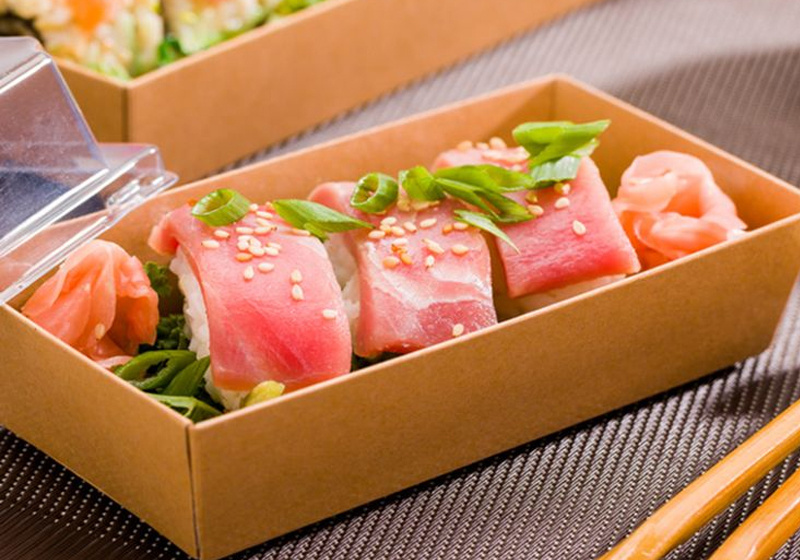
Comparative Analysis: Paper vs. Plastic Sushi Containers
Choosing the right packaging involves balancing cost, environmental impact, and consumer perception. While plastic has long been the industry standard due to its transparency and low cost, paper alternatives are quickly closing the gap by offering superior branding opportunities and meeting the growing demand for sustainable business practices. The table below outlines the core differences between these two materials in a commercial sushi context.
| Feature | Disposable Paper Box | Traditional PET Plastic |
| Biodegradability | High (90-180 days in compost) | Low (Hundreds of years) |
| Custom Branding | Full-surface printing available | Limited to labels or stickers |
| Heat Resistance | Good (Suitable for tempura rolls) | Moderate (May warp with heat) |
| Visual Clarity | Partial (via window) | Full (Transparent lid) |
Maximizing Brand Value Through Eco-Friendly Packaging
In the premium sushi market, the packaging is considered an extension of the chef's craft. Disposable paper boxes offer a matte, organic texture that conveys a sense of high quality and environmental responsibility. Restaurants can leverage the printable surface area of paper boxes to share their brand story, origin of ingredients, or disposal instructions, turning a simple container into a marketing tool. This alignment with "green" consumer values not only justifies a premium price point but also fosters long-term customer loyalty in an increasingly eco-conscious marketplace.
Practical Tips for Selecting a Supplier
- Ensure the manufacturer holds FSC (Forest Stewardship Council) certification for ethical sourcing.
- Request samples to test the oil-resistance of the internal lining with soy sauce and spicy mayo.
- Verify that the inks used for custom printing are soy-based or food-safe water-based inks.