


 English
 русский
 Español
 中文简体
中文简体Content
The Anatomy of a High-Performance Salad Paper Bowl
A superior salad paper bowl is more than just a vessel; it is a carefully engineered solution designed to maintain the structural integrity of fresh greens and heavy toppings. Most premium bowls are constructed from food-grade kraft paper or bleached paperboard, which provides a rigid frame that resists collapsing under the weight of wet ingredients. To prevent the "soggy bottom" syndrome common in lower-quality disposables, these bowls feature a thin aqueous or PLA (polylactic acid) lining. This barrier is essential for containing high-moisture components like cucumbers, tomatoes, and oily vinaigrettes without compromising the outer shell's firmness.
Key Technical Specifications and Material Comparisons
When selecting the right bowl for food service or home meal prep, understanding the material nuances is critical. The choice between traditional PE lining and eco-friendly PLA lining impacts both the carbon footprint and the heat resistance of the container.
| Feature | PE Lined Bowls | PLA Lined Bowls |
| Moisture Resistance | Excellent | High |
| Heat Tolerance | Up to 90°C | Up to 40°C |
| End-of-Life | Recyclable (in some areas) | Compostable |
Optimizing Salad Preservation with Vented Lid Integration
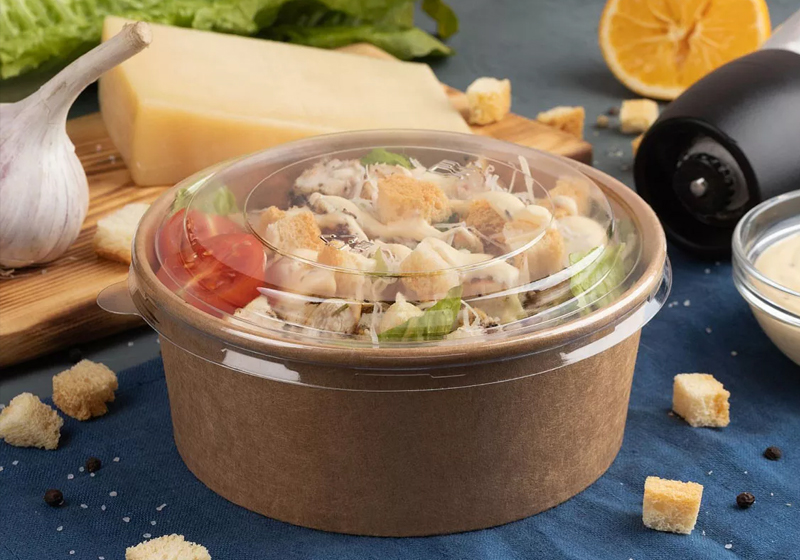
The functionality of a salad paper bowl is significantly enhanced by its lid compatibility. For "grab-and-go" establishments, the lid serves as a secondary preservation tool. While the bowl manages the moisture of the ingredients, the lid regulates the internal micro-climate. Clear PET lids offer high visibility for aesthetic presentation, while PP lids provide better durability for stacked transport. A tight-fitting rim is non-negotiable, as it ensures that dressings can be shaken inside the bowl to coat the leaves evenly without the risk of leakage or lid detachment during the process.
Best Practices for Meal Prepping in Paper
- Layer heavier, wetter ingredients like chickpeas or marinated artichokes at the bottom to stabilize the center of gravity.
- Keep the dressing in a separate small container or at the very base to avoid premature wilting of delicate greens like arugula or spinach.
- Store prepped bowls in a cool, dry environment to maintain the tension of the paper fibers.
Sustainability and the Shift Toward Circular Economy
The industry is rapidly moving away from single-use plastics in favor of fiber-based solutions. Modern salad paper bowls are increasingly being sourced from FSC-certified (Forest Stewardship Council) forests, ensuring that the raw materials are harvested responsibly. Beyond the source, the disposal phase is where these bowls shine. By opting for PFAS-free coatings, manufacturers are ensuring that the bowls can be safely composted or recycled without leaching harmful chemicals into the soil. This shift not only aligns with consumer values regarding environmental stewardship but also meets the stringent regulatory demands facing the global food packaging industry today.